Retain the glass
The display structure is applied to suitable glass rather than replacing the entire façade with a conventional opaque cabinet screen.

LED Screen
Transparent Flexible LED Film Display
Transparent Flexible LED Film Display is planned for suitable shop windows, showrooms, mall glazing and commercial interiors around viewing conditions, content, power and maintenance access.
Offered solely by Go-Between Limited. It is not a Bluing product or joint Bluing solution.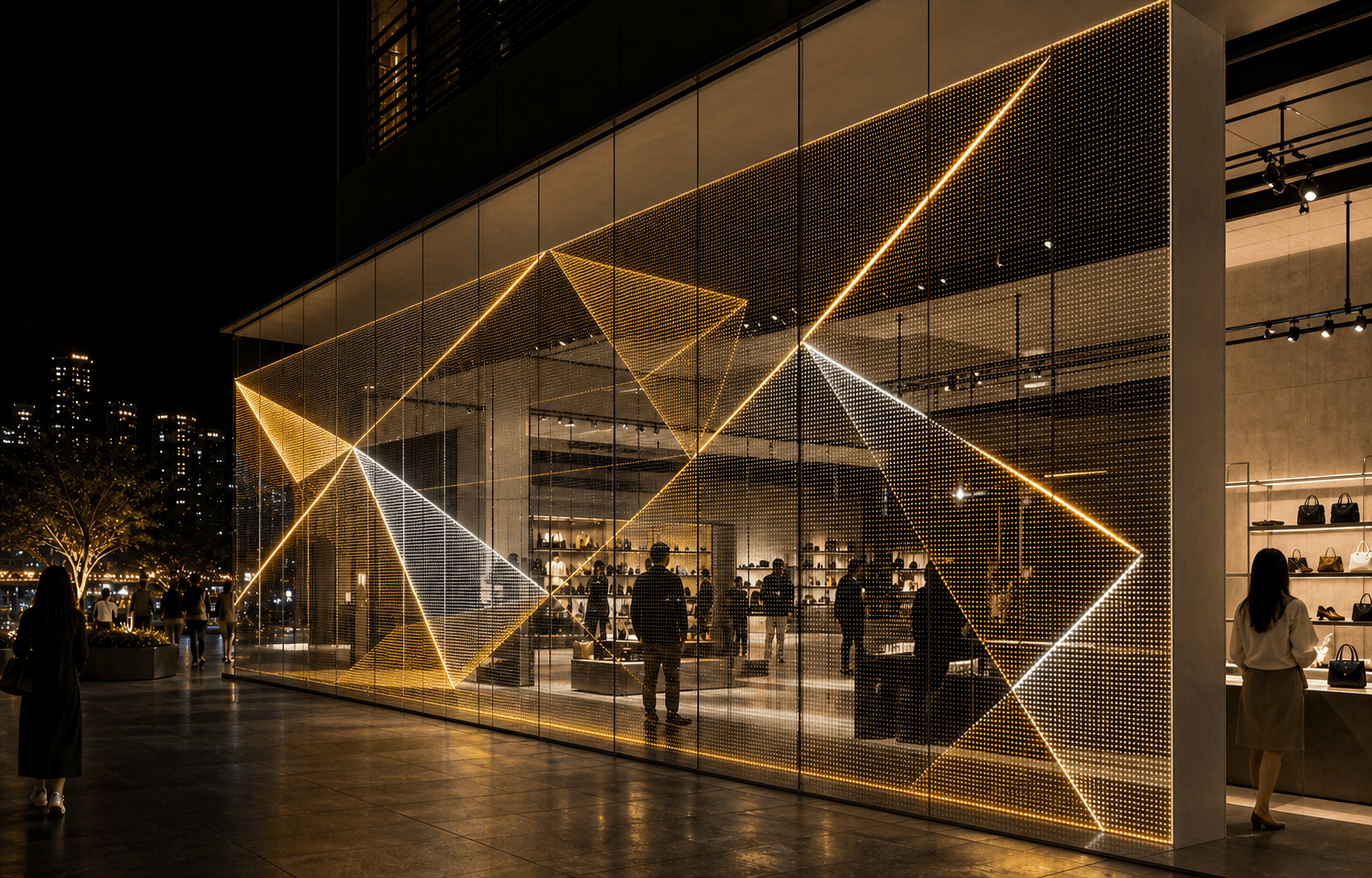
Transparent LED glass display
The solution is intended for suitable glazing where content visibility and continued sightlines both matter. Model direction is only selected after reviewing the site.
The display structure is applied to suitable glass rather than replacing the entire façade with a conventional opaque cabinet screen.
Film layout, edge fixing, control hardware, power route and service access are planned as one installation.
Pixel pitch, ambient light, viewing distance and intended content inform the model direction.
Screen structure
Glass type, dimensions, condition and access must be assessed first.
The display layer follows the approved module layout and viewing direction.
Edge or top-and-bottom fixing is coordinated with the glass and site conditions.
Power supplies, controllers, cable routes and maintenance access are planned around the approved installation.
Installation method
Measure the opening, check glass suitability, orientation, sightlines and safe access.
Set the film coverage, module joins, viewing direction and content area.
Confirm the fixing method and detail against the actual glass and surrounding construction.
Install the approved power and control arrangement, then test content and service access.
A dedicated LED power point may not need to have been reserved in every retrofit situation, but suitable power availability, cable routing, isolation and safety requirements must always be confirmed on site.
Transparency and viewing
Review façade orientation, direct sun, internal lighting and changes across operating hours.
The open grid can allow light and views through, but glass reflection still varies with angle, interior brightness and exterior conditions.
High-contrast motion graphics and correctly scaled typography are generally easier to read than fine-detail content.
Pixel pitch and content scale should be reviewed together from the intended audience position.
Commercial display applications
Confirmed specification direction
| Model direction | Pixel pitch | All other specifications |
|---|---|---|
| Nearer viewing direction | P4 | Specifications subject to model and site requirements |
| Higher-transparency direction | P6 | Specifications subject to model and site requirements |
| Higher-output direction | P3.91 | Specifications subject to model and site requirements |
Brightness, transparency, weight, thickness, power, viewing angle, lifespan, ingress protection, warranty, certification and availability must be confirmed against the current supplier datasheet and the selected project configuration.
Pre-installation assessment
Glass type, condition, dimensions and orientation
Internal and external viewing positions
Ambient light, reflections and direct sun exposure
Intended content, viewing distance and operating hours
Power availability, isolation and proposed cable route
Control equipment location and content connection
Fixing edges, access equipment and maintenance route
Landlord, façade, structural and electrical requirements where applicable
Delivery approach
Measure, photograph and review the glazing, viewing conditions, access and power constraints.
Recommend a pixel-pitch direction, coverage, control approach and key assumptions for review.
Confirm fixing, electrical routing, control equipment and responsibilities with the relevant project parties.
Coordinate installation, content testing and the agreed handover requirements.
Frequently asked questions
The film layout, fixing detail, power route and controller position are coordinated around the assessed glass and surrounding construction. The exact method depends on the selected model and approved site arrangement.
It can be applied to many suitable flat glass surfaces. The glass type, surface condition, dimensions, orientation, fixing method and installation access must be assessed before a model is confirmed.
Some configurations may use a suitable, compliant 13A power connection. Electrical capacity, cable routing, controller position and safety requirements must still be confirmed for the site.
The mesh-style display structure is designed to balance visible content with glass transparency. Actual daytime viewing still depends on the selected model, ambient light, reflections, facade orientation, viewing distance and content.
Those values depend on the selected model and current supplier data sheet. They will be confirmed in the project proposal rather than estimated on this page.
We review the available power and cable route, glass and installation condition, controller position, work scope, access arrangements and construction difficulty before confirming the solution.
Source material
This overview uses the existing Glass LED product deck and approved website content. Request the current model datasheet before specification or purchase.
Go-Between Limited